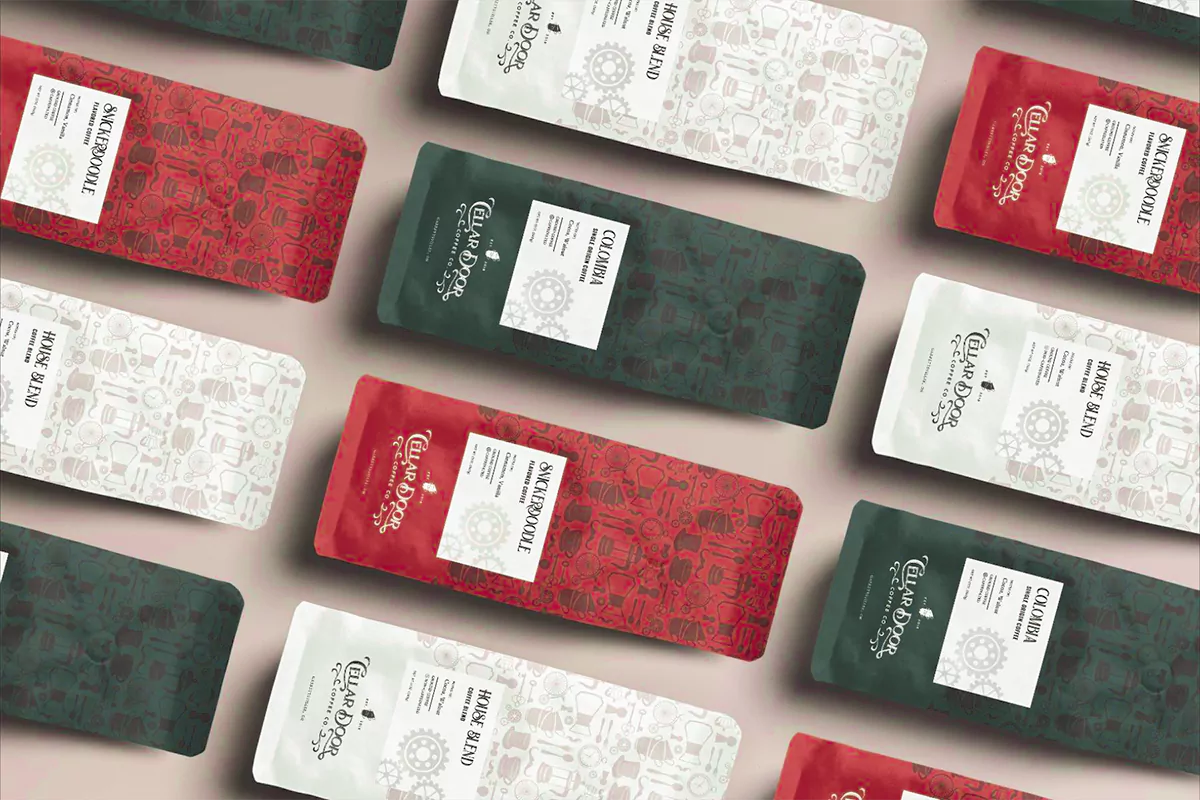
To choose custom eco friendly coffee packaging for your brand, target barrier films maintaining oxygen transmission rates under 0.5 cc/m²/day, utilize EN 13432 certified compostable polymers or 100% PE mono-materials, and match valve degas specifications to roasted coffee carbon dioxide off-gassing rates of 2 to 6 liters per kilogram.
Standard roasted beans release up to 10 liters of carbon dioxide per kilogram during the first 14 days after roasting, creating internal package pressure that ruptures heat seals without proper venting. Traditional aluminum foil laminates provide high barrier security, yet they generate significant plastic waste in landfilled streams across 2024 regional audits. Sustainable alternatives replace fossil laminates with bio-based high-barrier structures while preserving volatile aroma compounds.
Whole bean shelf life declines by 50% when exposed to oxygen levels above 1% within the primary container.
The search for balanced preservation leads roasters to paper coffee packaging bags, which utilize internal bio-cellulosic linings to limit light penetration and oxygen migration. Manufacturing tests from 2025 demonstrate that unbleached kraft paper coupled with plant-derived polylactic acid (PLA) maintains lipid stability across 180 days of ambient storage. These paper-based formats reduce fossil plastic usage by 68% compared to standard tri-layer pouches.
| Material Type | Oxygen Permeability (cc/m²/day) | Moisture Barrier (g/m²/day) | Standard Disposal Stream |
| Fossil PET/AL/PE | < 0.1 | < 0.1 | Municipal Landfill |
| Kraft/PLA Laminate | < 0.8 | < 1.5 | Industrial Compost (EN 13432) |
| 100% PE Mono-Material | < 0.4 | < 0.5 | Soft Plastic Store Drop-Off |
Matching disposal infrastructure with material choices ensures that sustainable claims match real-world recycling processing capabilities. A 2023 European packaging survey revealed that 82% of municipal facilities lack optical sorters for mixed bio-plastics, causing contamination in standard mechanical streams. Selecting mono-material polyethylene (PE) or polypropylene (PP) permits processing through curbside collection networks operating in over 40 countries.
+-----------------------------------------------------------------------+
|  ROASTED BEAN OFF-GASSING & BARRIER LIFECYCLE                         |
|                                                                       |
|  [Roast Phase] --> 2-6 L/kg CO2 Released over 14 Days                  |
|  [Package Phase] --> One-Way Degassing Valve Vents CO2 / Blocks O2    |
|  [Storage Phase] --> Target internal O2 stays below 1.0%               |
+-----------------------------------------------------------------------+
High-barrier films require matching degassing valves made from identical polymer families to permit complete container recycling. Non-recyclable rubber disc valves compromise mono-material bags, forcing whole packages into incinerators. In 2024, valve producers achieved 100% bio-based polyethylene valves that heat-seal at 135°C, matching standard pouch assembly line parameters.
Heat seal integrity depends on precise temperature control between 120°C and 160°C during automated filling operations.
Inconsistent sealing temperatures create micro-voids, allowing moisture entry rates above 0.5 g/m²/day and accelerating bean stale rates. Water vapor absorption above 1.2% by weight causes roasted beans to lose crispness and develop flat flavor profiles during extraction. Testing batch samples with dye penetration protocols verifies seam strength across temperature fluctuations during distribution.
Transitioning to water-based or soy-based inks removes volatile organic compounds (VOCs) during the package printing process. Studies conducted across 500 printing facilities in 2025 showed soy-based inks reduce chemical emissions by 85% compared to solvent-based alternatives. Digital printing onto paper coffee packaging bags allows brands to run short runs starting at 500 units without liquid chemical setup waste.
Lighter packaging materials reduce transportation weight, lowering fuel consumption across international shipping logistics. Converting from glass jars to flexible stand-up pouches cuts total freight weight by 60%, decreasing logistics carbon emissions across long routes. Transporting flat-packed pouches requires 75% less storage space prior to filling than pre-formed rigid containers.